
In 1954, the CIA overthrew Guatemala’s elected president, Jacobo Árbenz. The consequences reached far beyond Guatemala: the experience helped radicalize Che Guevara and became part of the revolutionary mythology that shaped Latin America for decades.
In September 2014, while researching the story for WAR: The Afterparty, I had lunch with former Guatemalan president Jorge Serrano Elías. I asked him about his encounters with Fidel Castro—and about what happened when he tried to enlist Castro’s help in ending Guatemala’s civil war.
Che Guevara’s wife, Peruvian economist Hilda Gadea Acosta, said, “It was Guatemala which finally convinced him of the necessity for armed struggle and for taking the initiative against imperialism. By the time he left, he was sure of this.”
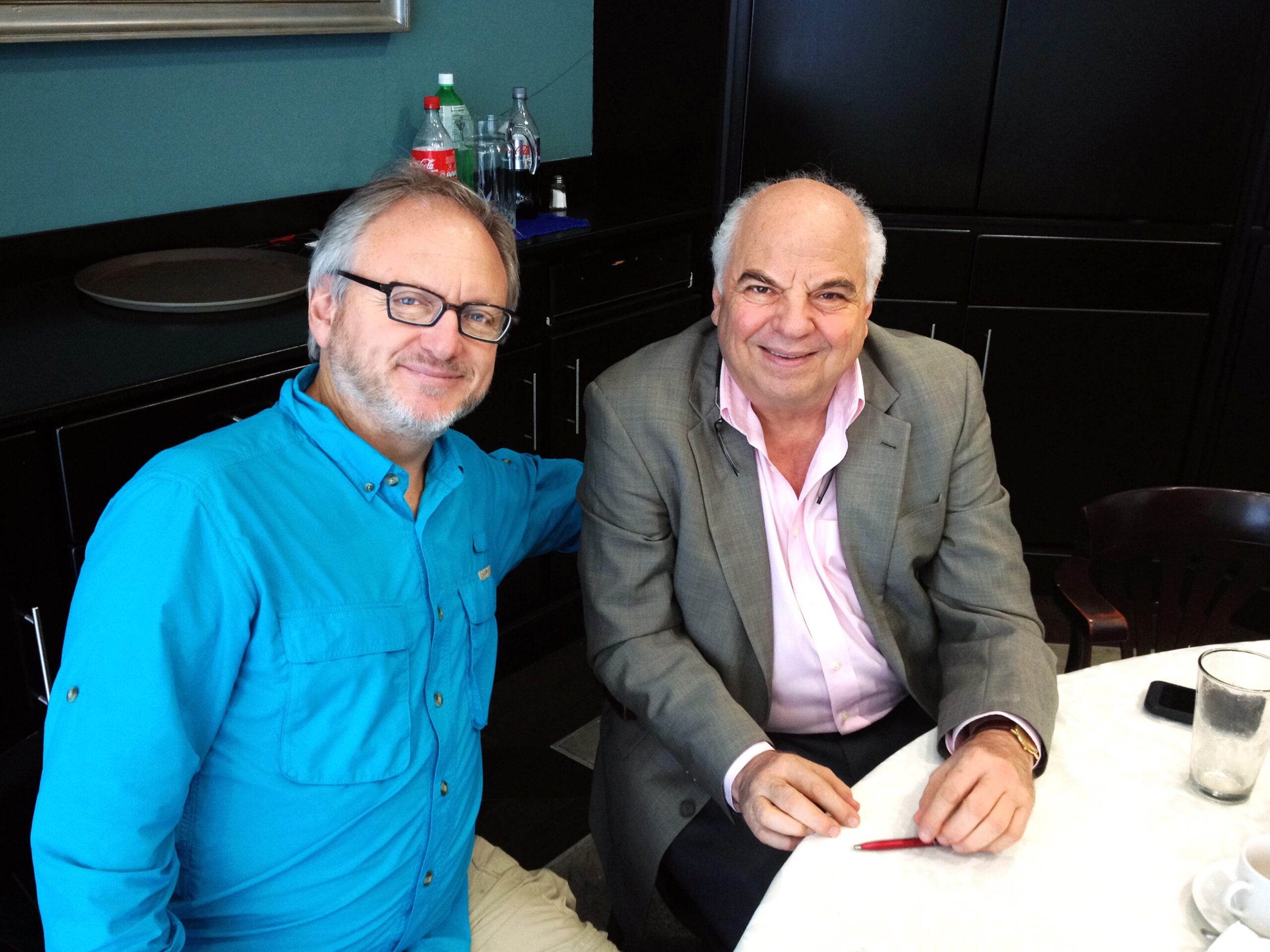
President Serrano invited Ivan and me to lunch with his sons and Rodrigo Diaz, during which I asked him about his encounters with Fidel Castro.
I met him on two occasions. Once in Mexico, in Guadalajara, and another time in Spain.
The first meeting was, you know, he was very impressive, because Fidel, when you talk to him, he is charming, he has a strong personality, but very open. He had respect for me because he always recognized that I kept an independent course. He was following me since I was one of the members of the National Reconciliation Commission, the national body promoting the peace accords. So, I had some indirect communication with him. But the first direct meeting was in Guadalajara.
Serrano talked to Fidel about his efforts at ending the 30-year civil war in Guatemala and asked him to be a positive influence with the guerrillas.
Fidel agreed. He said, “I am going to help you. I don’t have too much influence in Guatemala, but I am going to speak to them.” And he did. He helped me. At least they knew that the opinion of Fidel was going to be in my favor.
Fidel was explaining to me all the liberties in Cuba, and talked about religion. I said, “Oh, Fidel, if it is so, I would like to send some Bibles to Cuba. If I can send them, let me know how can I do that?”
Fidel asked how many Bibles. I told him half a million.
“OH, CHICO!!” he said. “You want to evangelize all the island. Why, so many?” My answer was, “Exactly for the same reason that you’re sending propaganda to Latin America.”
Serrano received a call from the ministry of foreign affairs who told him that President Castro said he could send the first 10,000 Bibles.
So I made all the connections to the Bible societies. And then the ministry said, “You are going to give us the Bibles to distribute.” And I said, no, I was going to send the Bibles to somebody to distribute. I came to send 30,000, a big difference from a half million, but it was OK.
I expressed interest in the fact that he is a capitalist and a Christian, and Fidel is neither. And that that even those who oppose Castro’s ideology in Latin America seem to have appreciation or respect for him at some level.
I told my wife we were going to meet him. And my wife said, “No. Look at what he has done to my country. I am not going to meet with him.” But I said it was a piece of history. After 20 minutes with Fidel, she was laughing and they were best friends.
In Madrid, some of the presidents of Latin America had a meeting hosted by Spanish President Felipe Gonzalez. And instead of having the seats in the usual way, they put the seats in the round. So all the presidents had the opportunity to be seeing each other. Then Castro gets into the room and the Paraguayan president gets into the room and they sit across from each other.
When I come into the room, Fidel says, “Serrrano come sit here.” I sat with him and started to talk. To pass the time, Fidel asks the Paraguayan president how many hectares he has. (A hectare is equivalent to 100 acres.) The answer is 20.
Fidel said, “Oh, but that is a minimum!”
“Twenty THOUSAND,” the Paraguayan president said.
Fidel laughed. “Oh, Chico you are a lacayo (a servant of the imperialists)!”
Felipe Gonzales said, “And you Fidel, what are you talking about, you have a complete island.”
Fidel said, “Yes, but I cannot sell it and I am not selling it.”
Why do you think Fidel didn’t liberalize after some years?
Ah, I asked him. You know there was a meeting with the presidents of Mexico, Colombia and Bolivia in 1992 or 1993. They got together in Veracruz, because at that time there was a rumor that the Americans were going to try to start a conflict over the bases in order to get into Cuba.
The meeting was a disaster. The American problem was presented, but after 20 minutes, Fidel stands up, and tells all his people to get ready and go back to Cuba. He cut all communication with these presidents. So the president of Venezuela called me and asked if I would talk to him since Fidel appreciated me. “We need to open his eyes because a bloodbath can come to Cuba,” I was told.
The next day, I saw Fidel in a reception, and said I needed to talk to him alone. He said we’d do it in Barcelona, because we were going there for the inaugural ceremony of the 1992 Summer Olympics.
I was resting in the hotel before the inauguration, and a knock comes on my door, and I was told President Castro is available if I have the time. I told Fidel we are really worrying about this situation between Cuba and the U.S. because it will cause a real problem for Latin American countries. He listened. He was not alone, as I had asked. There were two guys in the room, one from the government party and the other from foreign affairs.
Fidel said, “Serrano, I accept your concerns. Because it is from you and not from one of these servants of the imperialists. But I am going to live with the revolution and I am going to die with the revolution. I am not going to be like (Romanian president) Ceaucescu. If I open the door THIS much, they are going to get in, and destroy the revolution. So the revolution will continue till I die or I die with the revolution.”
——————
The Árbenz family, in some ways, were the Kennedys of Guatemala. Jacobo and María Árbenz, a young, glamorous couple, with attractive children, wealthy, but committed to uplifting their country’s poor.
After the coup, the family has trouble finding a country that will accept them, due to pressure from the U.S. State Department. They’re forced to seek asylum in Czechoslovakia. They’re not happy there. They finally end up back in Mexico, though under tight supervision.
One of Árbenz’ daughters commits suicide. Árbenz himself ends up dead under mysterious circumstances, scalded to death in a bathtub in a Mexico City hotel. His family still believes that he was assassinated, given the fact that the CIA had a death list of Guatemalan political leaders, left-wing figures and journalists that were to be eliminated after the coup.[i]
In the three decades after the U.S. intervened in Guatemala to depose President Jacobo Arbenz, it continued its war against communism throughout Latin America, supporting right wing military governments that openly violated human rights.
Eisenhower and later American presidents came to rely on covert operations when faced with the threat of communism in Latin America; based on the faulty assumption that the overthrow of Arbenz was quick and bloodless, PBSUCCESS became a model for future CIA actions in the region.
____________
Ernesto “Che” Guevara de la Serna was an Argentine doctor, whose father often hosted anti-fascist Republican veterans from the Spanish Civil War. Though an asthmatic, he became an avid cyclist, embarking on a series of travel adventures. The first, in 1950, was a 2,800-mile trek through rural Argentina on a bicycle, which he equipped with a small engine. The second was a five-thousand-mile motorcycle trip through South America with friend Alberto Granada, which he would document in The Motorcycle Diaries. The abject poverty, suffering and exploitation witnessed on the trip changed him forever.
There was a third trip, not immortalized in literature or film, that took him through Bolivia, Peru, Ecuador, Panama, Costa Rica, Nicaragua, Honduras, El Salvador and Guatemala. He began the trip, now a credentialed medical doctor, on July 7, 1953. In June of 1954, he witnessed the CIA overthrow of Guatemala’s government, an event which launched thirty-five years of civil war, a succession of brutal military governments and a culture of violence that endures to the present day. It was there he acquired the nickname “Che,” an Argentine expression meaning, more or less, “Hey, there,”[ii] because of his frequent use of the expression. He wrote,
The last Latin American revolutionary democracy – that of Jacobo Árbenz – failed as a result of the cold premeditated aggression carried out by the United States. Its visible head was the Secretary of State John Foster Dulles, a man who, through a rare coincidence, was also a stockholder and attorney for the United Fruit Company.[iii]
From a letter to his Aunt Beatriz while traveling through Guatemala in 1953,
I had the opportunity to pass through the dominions of the United Fruit, convincing me once again of just how terrible these capitalist octopuses are. I have sworn before a picture of the old and mourned comrade Stalin that I won’t rest until I see these capitalist octopuses annihilated.
His wife, Peruvian economist Hilda Gadea Acosta, said, “It was Guatemala which finally convinced him of the necessity for armed struggle and for taking the initiative against imperialism. By the time he left, he was sure of this.”
For more on “WAR: The Afterparty” and my six other books, visit electric-memories.com/books.